
Dental Implants vs. Dentures vs. Bridges — Which One Is Right for You?
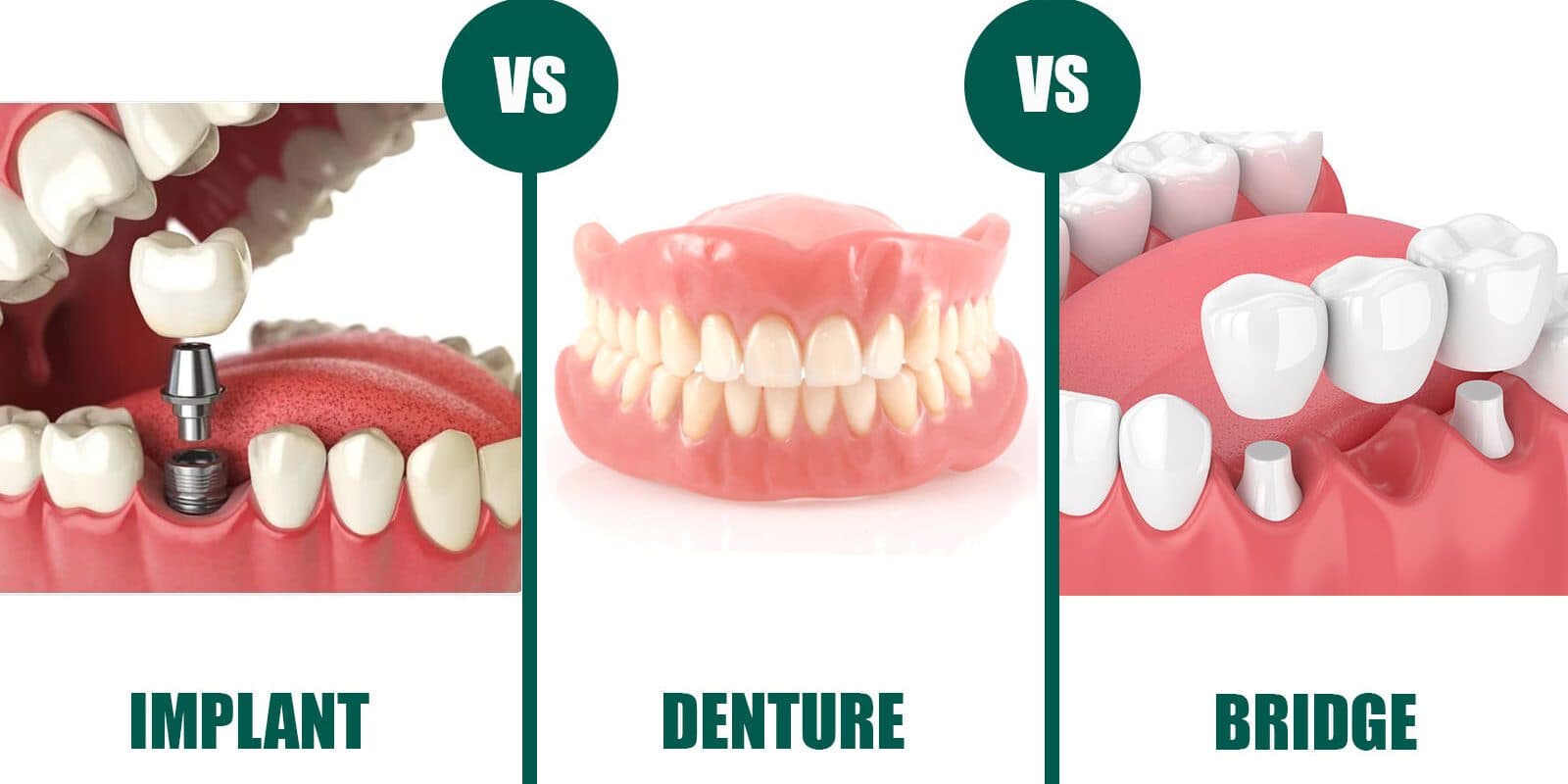
<p>If you're missing one or more teeth, you generally have three main paths to consider: dental implants, bridges, or dentures. Each has real trade-offs in cost, permanence, and what it involves — there's no single 'best' answer, only what's best for your specific situation.</p> <p>Dental Implants are the closest thing to replacing a natural tooth. A titanium post is placed into the jawbone to act as an artificial root, topped with a crown. Implants are permanent, don't rely on neighboring teeth for support, and help preserve jawbone density (missing teeth cause gradual bone loss over time, which implants prevent). The trade-off is cost and time — it's the most expensive option and the process (including healing time) can take a few months.</p> <p>Bridges replace one or more missing teeth by anchoring a false tooth to the crowns of the teeth on either side of the gap. They're faster and less expensive than implants, and don't require surgery. The downside is that the supporting teeth need to be shaped down to hold the crowns, and bridges don't prevent the bone loss that happens under the missing tooth.</p> <p>Dentures — complete or partial — are removable and typically the most affordable option, especially for replacing multiple teeth at once. Modern flexible dentures are more comfortable than older designs. The trade-off is that they require more maintenance, may need periodic adjustment as your mouth changes shape, and don't offer the same bite strength as implants or bridges.</p> <p>In practice, the right choice usually depends on how many teeth are missing, the condition of your jawbone and remaining teeth, your budget, and your timeline. This is genuinely worth a real consultation rather than a decision made from a blog post — but hopefully this gives you the right questions to ask when you come in.</p>